


Product details and test results were checked on ReifenDirekt.ch on 3 November 2026 and can change at any time.
Every autumn, Swiss drivers face the same ritual: book a slot at the garage, swap the summer set for winter tyres, and repeat the process in spring. All-season tyres, known in German as Ganzjahresreifen, promise to end that routine. But are they a sensible choice in a country of mountain passes and heavy snowfall?
Our earlier ReifenDirekt articles compared tyre brands and looked at winter tyres for Austria. This guide focuses on all-season tyres for Swiss motorists: who they suit, which markings matter, and how four of the most popular models on the shop compare.
Browse All-Season Tyres on ReifenDirekt.ch
In this guide
What Are All-Season Tyres?
An all-season tyre is designed to cope with both summer and winter conditions, using a tread compound and pattern that sit between a dedicated summer and a dedicated winter tyre. ReifenDirekt points out that the familiar “O bis O” rule of thumb (fitting winter tyres from October to Easter) no longer applies if you run all-season tyres, because the same set stays on the car all year.
That convenience comes with compromises. According to ReifenDirekt, all-season tyres can wear faster in hot summers, may produce more rolling noise and can lead to slightly higher fuel consumption compared with a summer tyre. In deep snow or on ice, a dedicated winter tyre still has the edge.
Swiss Rules and the 3PMSF Symbol
Switzerland has no fixed calendar date for winter tyres. Instead, as ReifenDirekt explains, drivers must have suitable tyres when wintry conditions arise, and only tyres carrying the 3PMSF symbol are approved for snow, ice and slush.
The 3PMSF marking (Three-Peak Mountain Snowflake, often called the Alpine symbol) is the one to look for. Until 2018, the M+S marking alone was enough, but new tyres now need the Alpine symbol to count as winter-capable. All four tyres in our comparison below carry it.
If you cross borders regularly, bear in mind that neighbouring countries have their own rules. ReifenDirekt notes that Austria requires winter equipment in wintry conditions from 15 November to 1 April, with a minimum tread depth of 4mm for radial tyres. Germany has a situational winter tyre rule, while Italy enforces winter rules on many routes and, between 16 May and 16 October, allows all-season or winter tyres only if their speed index is at least the one in the vehicle registration document.
Who Should Choose All-Season Tyres?
ReifenDirekt, citing the German motoring club ADAC, suggests all-season tyres make the most sense for:
- Drivers who cover relatively low annual mileage
- Motorists who mainly drive in lowland areas with little snow
- Owners of small cars or second cars
- People who mostly drive in town
If you live in an Alpine valley, commute over passes, or regularly head to the ski resorts, a dedicated set of winter tyres is still the safer bet. Likewise, high-mileage drivers who spend long summer days on the motorway may find that all-season tyres wear out faster than they would like.
Four Popular All-Season Tyres Compared
ReifenDirekt lists a range of popular all-season models, including tyres from Pirelli, Kleber and others. We picked four widely tested options in the common 205/55 R16 size. All were shown as in stock with the 3PMSF marking when we checked.
| Tyre | Test result shown | EV suitable | Key technology |
|---|---|---|---|
| Michelin CrossClimate 3 91V | Auto Zeitung 09/2026: “Sehr empfehlenswert” | Yes | Thermal Adaptive Tread Compound, Piano Acoustic tech |
| Goodyear Vector 4Seasons Gen-3 94V XL | ADAC, ÖAMTC and TCS 06/2024: “empfehlenswert” | Not stated | Centre sipes for snow grip, aquaplaning protection |
| Continental AllSeasonContact 2 91V | Tyre Reviews 03/2024: “Sehr empfehlenswert” | Yes (EVc) | Adaptive tread, low rolling resistance |
| Bridgestone Turanza All Season 6 91H | AUTO BILD allrad 10/2025: “Sehr empfehlenswert” | Yes (Enliten/EV) | ENLITEN tech, arrow-shaped tread, 2D sipes |
Information shown on ReifenDirekt.ch product pages for size 205/55 R16, checked 3 November 2026.
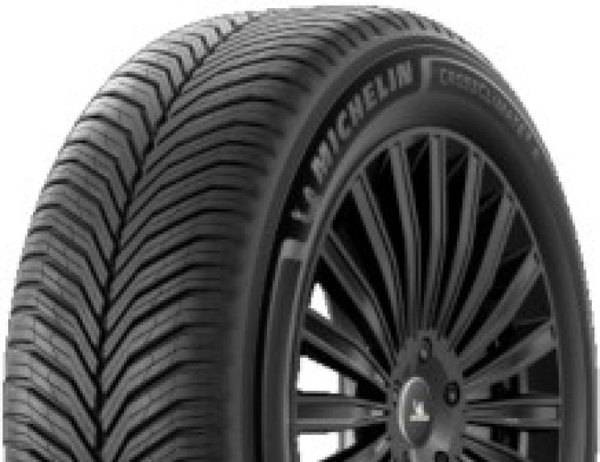
Michelin CrossClimate 3
The newest model in this group, the CrossClimate 3 uses a Thermal Adaptive Tread Compound. Michelin claims wet braking distances that are 4% shorter and up to 15% higher mileage. It also features Energy Efficiency technology, Piano Acoustic technology to reduce noise and a wear indicator. The tyre is produced in Europe and marked as suitable for electric vehicles.

Goodyear Vector 4Seasons Gen-3
The Goodyear has the strongest test record on its product page. It was rated “empfehlenswert” by ÖAMTC, ADAC and the Swiss TCS in 2024. The TCS praised its best-in-test wear score and environmental balance along with good wet and snow performance, noting only a slight weakness in the dry. ADAC highlighted its high predicted mileage, low weight and low fuel consumption. Earlier Auto Zeitung and AUTO BILD tests also rated it “Sehr empfehlenswert”, and the product page shows 388 test ratings.
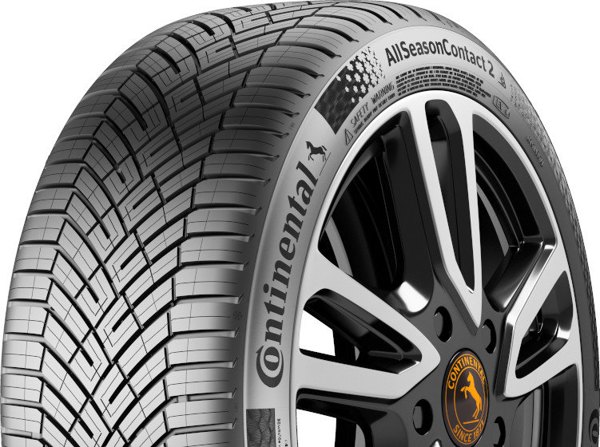
Continental AllSeasonContact 2
Developed in Germany, the AllSeasonContact 2 focuses on low rolling resistance and reduced wear, which Continental says helps extend the range of electric cars. Its adaptive tread is designed to perform across changing conditions, and Tyre Reviews rated it “Sehr empfehlenswert” in 2024.
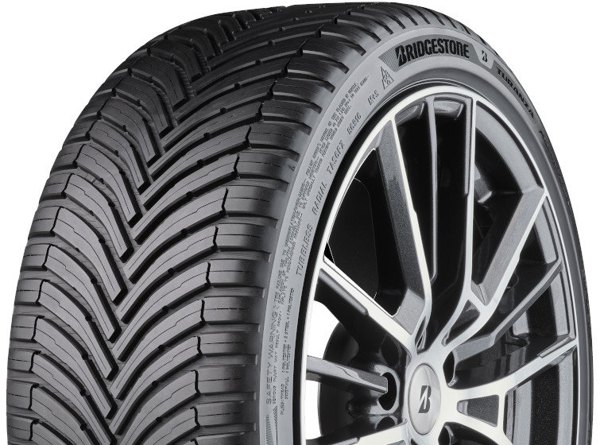
Bridgestone Turanza All Season 6
Bridgestone’s option uses its ENLITEN technology and is labelled EV-ready. An arrow-shaped tread pattern targets snow traction, while 2D sipes with spacers help keep the tread blocks stable. It is made in Europe and received a “Sehr empfehlenswert” verdict from AUTO BILD allrad in 2025. Note the H speed rating, which is lower than the V rating of the other three, so check your registration document.
Tread Depth and When to Replace
Because all-season tyres stay on the car all year, they wear continuously. ReifenDirekt cites TÜV Rheinland advice to replace them after roughly 40,000 km or about six years. It also recommends changing them once the tread falls below 3.5mm, even though the legal minimum is 1.6mm. For reference, experts quoted on the site recommend at least 3mm for summer tyres and 4mm for winter tyres.
Do not forget the EU tyre label, which has been mandatory for tyres produced since 1 November 2012. It rates fuel efficiency, wet grip and external noise, and it is a quick way to compare models beyond test verdicts.
Tips for Buying on ReifenDirekt.ch
- Buy at least in pairs per axle, as ReifenDirekt recommends, and ideally a full set of four for balanced handling.
- Shipping is free from two tyres, and prices are shown per tyre including VAT and delivery within Switzerland.
- Filter by the 3PMSF symbol to make sure your tyres are approved for Swiss winter conditions.
- Check the load index and speed rating against your vehicle registration document.
- Compare test results and EU label ratings on each product page before you buy.
ReifenDirekt has more than 20 years of experience selling tyres online and offers a choice of secure payment methods.
Find Your All-Season Tyres at ReifenDirekt.ch
Final Thoughts
All-season tyres are not for everyone in Switzerland, but for town drivers, low-mileage motorists and second cars in the lowlands they can save time, storage space and the cost of two seasonal changeovers. The key is to choose a model with the 3PMSF Alpine symbol and strong independent test results. The Goodyear Vector 4Seasons Gen-3, Michelin CrossClimate 3, Continental AllSeasonContact 2 and Bridgestone Turanza All Season 6 all fit that description. If you regularly drive in the mountains, though, a dedicated winter set is still worth the effort. Either way, ReifenDirekt.ch makes it easy to compare sizes, tests and delivery dates in one place.

Theo Louse
I am Theo Louse. My skills are dedicated to the field of technology information and try to make daily lives more enjoyable. With more than 12 years of experience with BM, we are particularly famous for 100% self-developed ideas. Over these years, we have worked to make everyday life more convenient for the fast-paced world we live in.