


Most of us in the UK drink straight from the tap without a second thought, and for good reason: mains water here is treated and closely regulated. Yet plenty of households still reach for a filter. Some want less limescale in the kettle, some dislike the taste of chlorine, and others just want extra peace of mind. The real question is which type of filter fits your kitchen and budget.
This guide walks through the main options, from simple under-sink ultrafiltration to countertop reverse osmosis units and instant hot water dispensers, using the Waterdrop UK range as a practical reference point because it covers almost every category in one place.
In this guide
- Why UK Households Are Buying Water Filters
- The Three Main Types of Home Water Filter
- Waterdrop Filters Compared at a Glance
- Under-Sink RO: Best for Homeowners Who Want It Built In
- Countertop RO: Best for Renters and Easy Setup
- Instant Hot Water Dispensers: A Kettle Replacement
- How to Choose: A Quick Checklist
- Final Thoughts
Why UK Households Are Buying Water Filters
Water hardness varies a lot across Britain. Large parts of England, particularly the South East, London and the East, are known for hard water, while much of Scotland, Wales and the North West tends to be softer. Hard water is not a health risk, but its calcium and magnesium leave limescale on kettles and taps and can dull the taste of tea.
Taste is the other big driver. Chlorine is added to keep water safe on its way to your home, and a carbon stage is the usual way to take the edge off it.
- Limescale and hardness: RO systems reduce dissolved minerals, which is what causes scale.
- Taste and odour: carbon filtration targets chlorine taste and smell.
- Convenience: filtered water on tap can replace a fridge jug or bottled water.
The Three Main Types of Home Water Filter
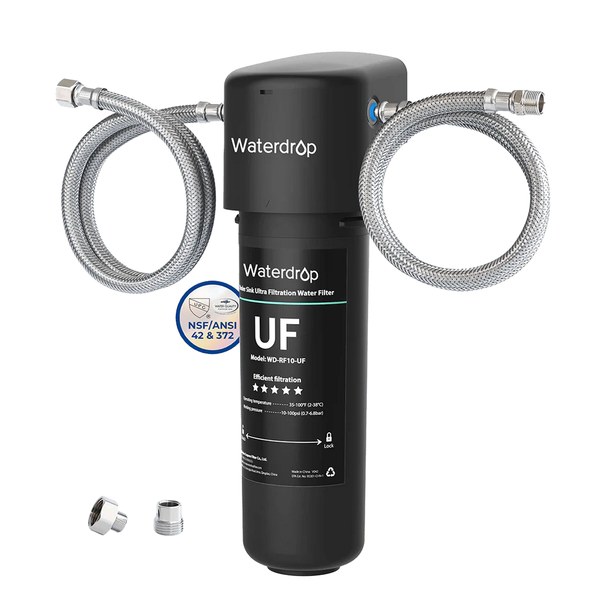
Under-sink ultrafiltration (UF). A compact cartridge system that connects to your cold water line. Ultrafiltration uses a fine membrane to catch particles, while leaving dissolved minerals in the water. It does not send a share of the water to drain the way RO does, so it suits people who are happy with their water hardness but want cleaner, better-tasting water.
Under-sink reverse osmosis. RO pushes water through a very fine membrane that also removes most dissolved solids, including the minerals behind limescale. Modern tankless units are compact but still need a drain connection and usually a dedicated tap.
Countertop reverse osmosis and hot water dispensers. These sit on the worktop, you fill a tank from the tap, and the machine filters it. No plumbing is needed, which makes them a favourite with renters. Some also heat water instantly, doubling as a kettle replacement.
Waterdrop Filters Compared at a Glance
The table below summarises several models listed on the Waterdrop UK site. Prices are as listed on waterdropfilter.co.uk when we checked in October 2026 and change often, so always confirm the current price before ordering.
| Model | Type | Key details (per Waterdrop) | Listed price |
|---|---|---|---|
| Ultrafiltration direct connect | Under-sink UF | 0.01 micron UF membrane, keeps minerals | GBP 79.99 |
| G5P500 | Under-sink RO, tankless | 7-stage filtration, 500 GPD flow, installs in under 30 minutes | GBP 239.99 |
| G2P600 | Under-sink RO, tankless | 600 GPD flow, 2:1 pure to drain ratio | GBP 299.99 |
| X8 | Under-sink RO, tankless | 9-stage filtration, certified to NSF/ANSI 42, 58 and 372 | GBP 699 |
| C1SL | Countertop RO | 7-stage RO, adds minerals back, no installation | GBP 259 |
| CT01 | Countertop hot and cold | 6-stage filtration, 1.32 gallon tank | GBP 229 |
| K19-HG | Countertop RO, instant hot | Alkaline mineral stage, instant hot water | GBP 309 |
| A2 | Countertop RO, hot and cold | 15C to 95C range, 3:1 pure to drain ratio | GBP 449 |
You can check the full line-up, filter replacement prices and any current offers on the official Waterdrop UK store.
Under-Sink RO: Best for Homeowners Who Want It Built In
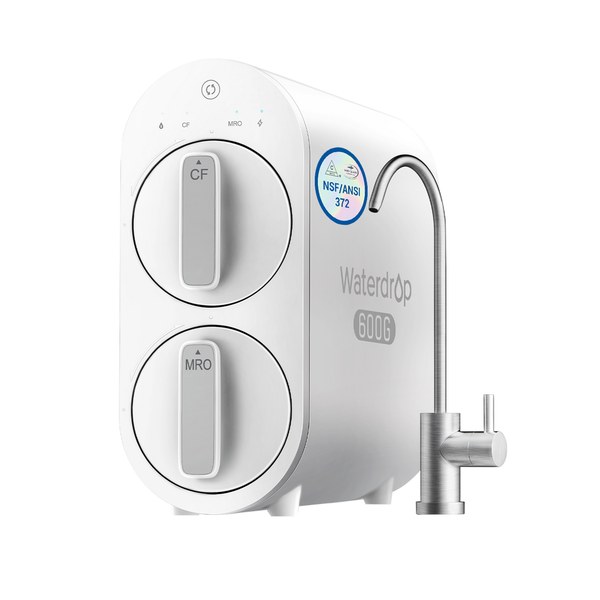
For homeowners who want filtered water straight from a tap, under-sink RO is the neatest long-term option. Waterdrop focuses on tankless designs, which it says free up most of the cupboard space a traditional storage tank would take. The G5P500 is the entry point to the range, with seven filtration stages and a 500 gallons per day flow rating. The G2P600 steps up to a 600 GPD rating, and Waterdrop highlights a 2:1 pure to drain ratio, meaning less water goes to waste than on many older RO units. Waterdrop also says the G series reduces calcium and magnesium, which is exactly what UK hard water drinkers are after.
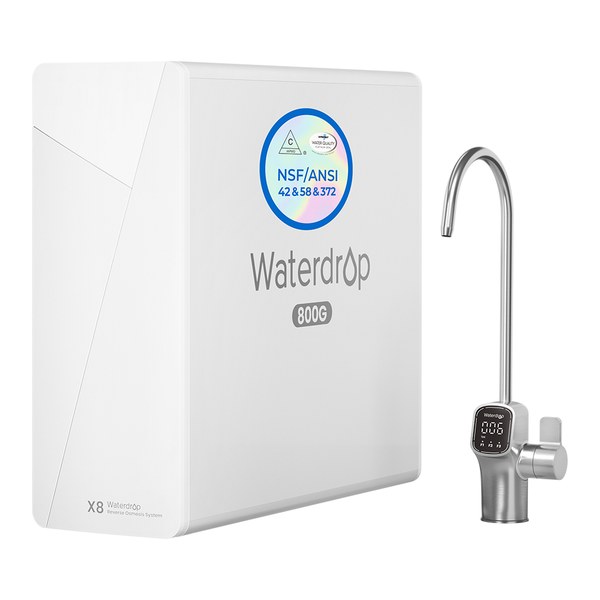
At the top end, the X Series adds more stages and independent certification. Waterdrop states that the X8 is certified by IAPMO to NSF/ANSI 42 and 58 for the reduction claims on its performance data sheet, and to NSF/ANSI 372 for low lead.
Things to check first: you will need space under the sink, a cold water supply, a drain connection and somewhere to fit the dedicated tap.
Countertop RO: Best for Renters and Easy Setup
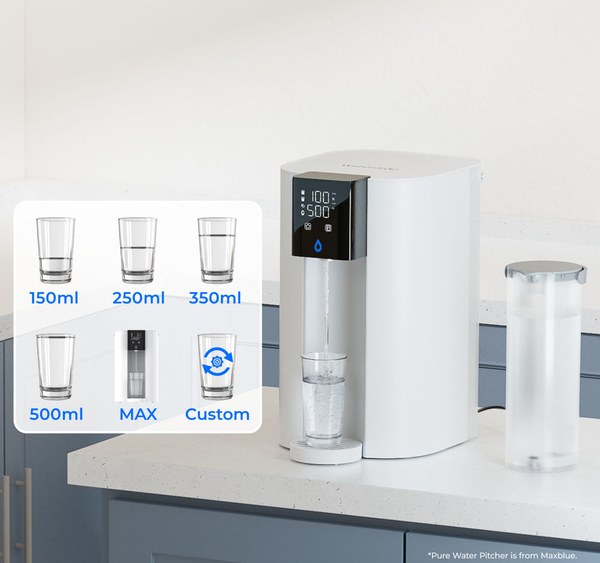
Countertop units are the answer if you rent, cannot drill a worktop, or simply do not want to touch the plumbing. You fill the tank, plug it in and press a button. The C1SL, shown at the top of this article, is a seven-stage RO countertop system that Waterdrop says adds beneficial minerals back after filtration, with five dispensing volume options and a portable pitcher.
The trade-off is worktop space and refilling the tank regularly, which is often a fair swap for a smaller household.
Instant Hot Water Dispensers: A Kettle Replacement
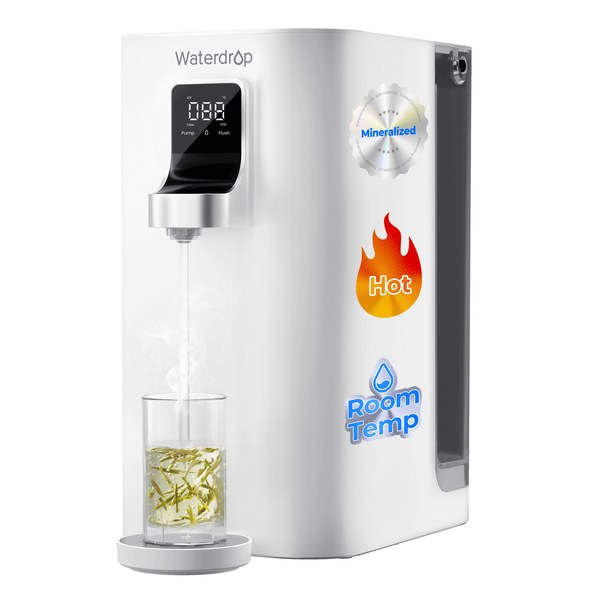
Tea drinkers boil a kettle many times a day, and hard water quickly coats the element with scale. An instant hot RO dispenser filters the water and heats it on demand, so you only heat what you pour. The K19-HG combines RO filtration, an alkaline mineral stage and instant hot water. The CT01 offers hot and cold dispensing with six filtration stages and a 1.32 gallon tank.
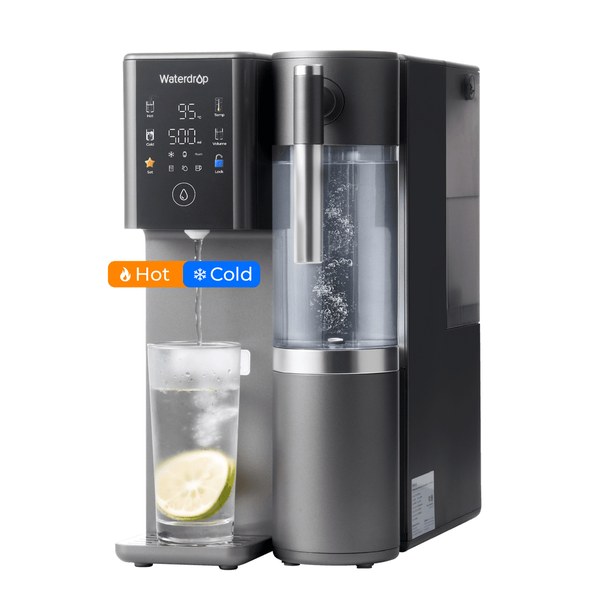
The A2 is the most flexible of the three, with a touch screen and a temperature range of 15C to 95C according to Waterdrop, so you can pour chilled water or water for tea from the same machine. It also lists a 3:1 pure to drain ratio. If you are already thinking of replacing a tired kettle, it is worth comparing the hot water models side by side.
How to Choose: A Quick Checklist
- Do you rent? Choose a countertop RO or hot water dispenser that needs no installation.
- Hard water area? RO reduces the minerals behind limescale; UF keeps them.
- Big household? Look at flow rate (GPD) on under-sink models, or tank size on countertop units.
- Heavy tea or coffee drinker? An instant hot dispenser can replace the kettle.
- Want certification? Check which models list NSF/ANSI certification on the product page.
- Running costs: factor in replacement filters, which Waterdrop sells separately.
Final Thoughts
There is no single best water filter for every UK home. Homeowners in hard water areas who want filtered water on tap will get the most from a tankless under-sink RO system. Renters and anyone who wants zero installation should look at countertop RO, and households that live on tea and coffee may find an instant hot dispenser the most useful upgrade of all. Whichever you choose, check filter costs and current pricing on the official site first.

Theo Louse
I am Theo Louse. My skills are dedicated to the field of technology information and try to make daily lives more enjoyable. With more than 12 years of experience with BM, we are particularly famous for 100% self-developed ideas. Over these years, we have worked to make everyday life more convenient for the fast-paced world we live in.