


Introduction
Most security camera guides assume you have a power socket nearby and a strong home network. Many of the places people actually worry about have neither.
Think of the garden shed at the bottom of the lawn, a Schrebergarten plot on the edge of town, a caravan parked for the winter, or a holiday flat in the Alps that sits empty for months. Running cable to these spots is expensive, and sometimes it is simply not allowed.
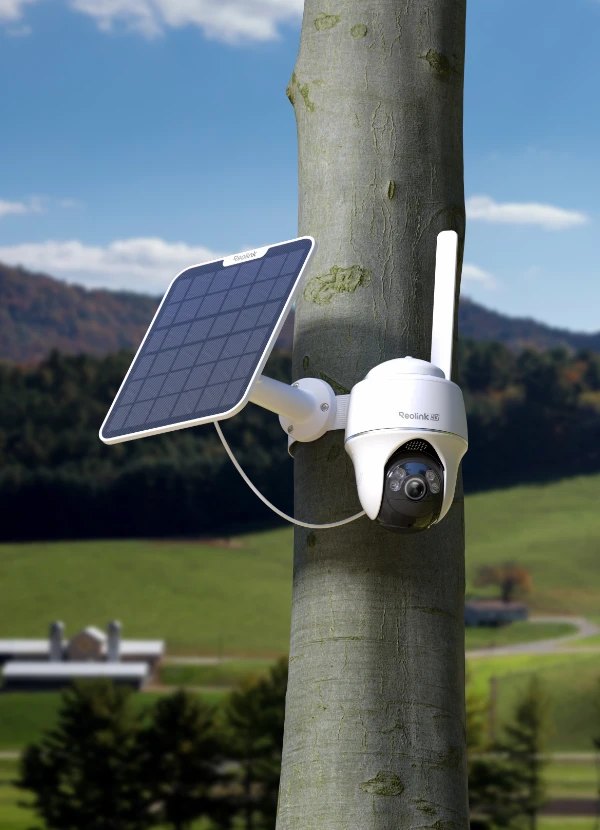
This is where wire-free cameras come in. Reolink builds a whole range of battery and solar powered cameras, including models that connect over 4G LTE instead of WiFi. This guide looks at when each type makes sense and what to check before you buy.
1. Why Off-Grid Spots Need a Different Kind of Camera
A standard PoE or plug-in camera is perfect for the front door of a house. It draws constant power and streams over a cable or a nearby router.
Remote spots break both assumptions. There may be no electricity at all, and the nearest WiFi router can be 50 metres and two walls away. Even when there is power, you may not want to drill through the wall of a rented garden plot or a leased holiday home.
Off-grid cameras solve this with three ingredients:
- A rechargeable battery inside the camera
- A small solar panel that tops the battery up during the day
- A connection that suits the location: WiFi where a router is in range, or a mobile data SIM where it is not
Because these cameras only wake up fully when their motion sensor triggers, they can run for long periods on very little energy.
2. Solar and Battery Cameras for Gardens and Sheds
If your shed, garage or garden is still within reach of your home WiFi, a solar WiFi camera is usually the simplest option.
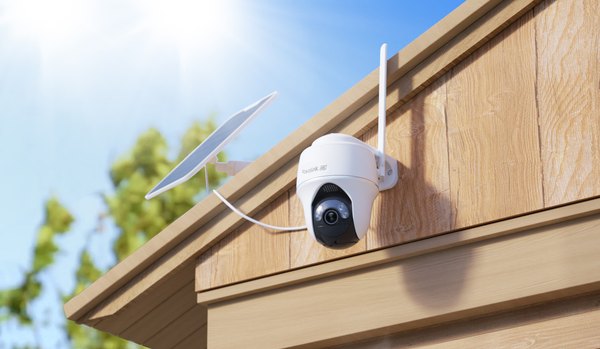
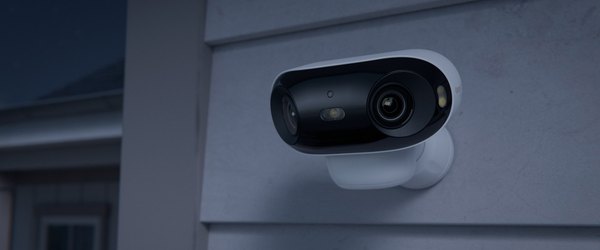
The Reolink Argus 4 Pro is a good example. It is a 4K camera that stitches two lenses into a 180-degree panoramic image, so one unit can cover a whole garden or driveway. It runs on battery and solar power, uses dual-band WiFi 6 and carries an IP66 weatherproof rating.
Its ColorX night vision is designed to produce colour images at night without relying on a bright spotlight. Reolink says this saves power compared with an IR 4K camera and adds up to 12 days of standby time in its lab tests.
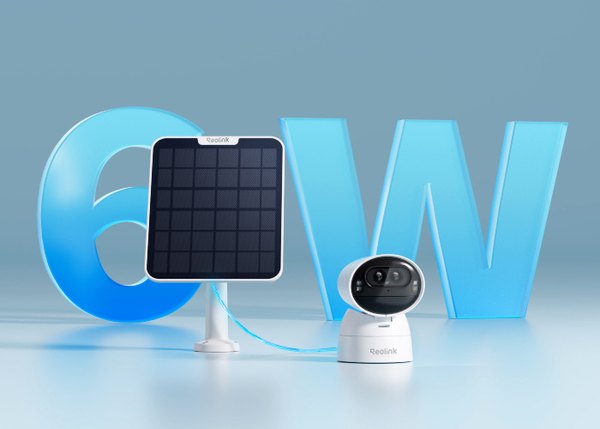
For larger plots, a pan and tilt model can follow movement across the whole area. Reolink describes the Altas PT Ultra as a 4K solar camera with a 360-degree field of view and up to 500 days of battery life. With its 6W solar panel, Reolink says around 10 minutes of sunlight a day can keep it running around the clock in PIR trigger mode.
3. 4G LTE Cameras for Places Without WiFi
Allotment gardens, building sites, farm buildings, stables and parked caravans often have no internet at all. For these locations a 4G camera is the practical answer.
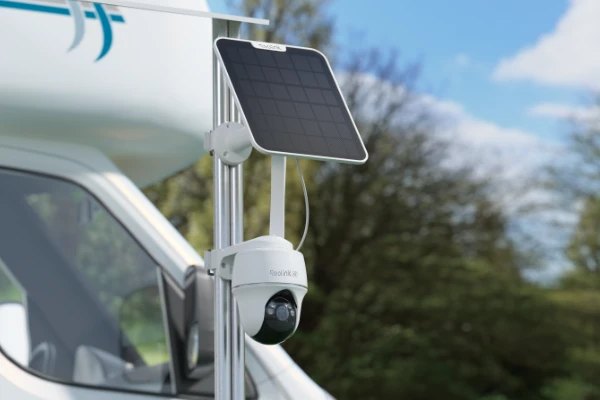
The Reolink Go PT Ultra takes a nano SIM card and streams over the mobile network. It records in 4K (8MP), pans 355 degrees and tilts 140 degrees, and can be powered by its battery and a solar panel. It also offers smart detection, colour night vision and two-way audio, so you can speak to someone on site through the app.
A few practical tips for 4G cameras:
- Check the mobile signal at the exact mounting spot before you buy
- Choose a data plan that fits how often you expect motion events and live viewing
- Use detection zones so passing cars or swaying branches do not eat through your data
- Mount the solar panel facing south with as little shade as possible
4. Holiday Homes and Second Properties
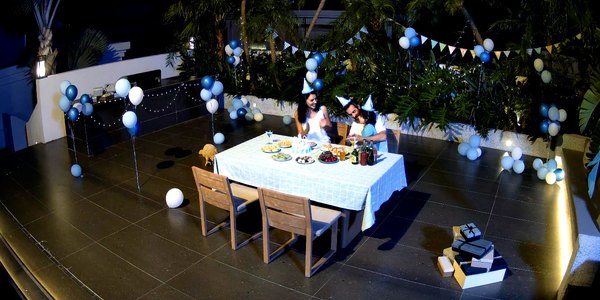
A holiday apartment or weekend cabin often sits empty for weeks. A battery camera inside the entrance and a solar camera outside can show you whether a delivery arrived, whether snow has piled up on the terrace, or whether someone is trying the door.
Real-time push notifications and email alerts mean you hear about an event while it is happening, not when you next visit. Live view lets you check in from anywhere.
If the property has WiFi, a solar WiFi model is the easier choice. If the router is switched off when you leave, or there is no broadband at all, a 4G model keeps working on its own.
5. Storage Without Monthly Fees
One of the main reasons people pick Reolink is local storage. Many of its battery cameras record to a microSD card, so you are not forced into a subscription.
According to Reolink, the Argus 4 Pro supports microSD cards up to 512GB and can also connect to a Reolink Home Hub when you run several cameras. The Go PT Ultra supports microSD cards up to 128GB or Reolink Cloud storage.
Local recording also keeps your footage in your own hands, which many households in Germany value highly.
6. Detection Settings That Save Battery
Battery life depends heavily on how often the camera wakes up. A few simple settings make a big difference:
- Use the PIR motion sensor together with person, vehicle and animal detection to cut false alerts
- Draw motion zones that exclude a busy pavement or a neighbour’s garden
- Lower the sensitivity in windy spots with trees and hedges
- Limit how long each recording clip runs
Privacy masks are useful here too. In Germany you should avoid filming public paths or a neighbour’s property, and masking those areas out keeps your setup both considerate and compliant.
7. Which Reolink Camera Fits Which Place?
As a rough guide:
- Garden or driveway within WiFi range: Argus 4 Pro for a wide 180-degree view
- Large plot or yard where you want to follow movement: Altas PT Ultra or Argus Track with auto-zoom tracking
- No WiFi at all (allotment, caravan, building site): Go PT Ultra on 4G LTE
- Indoor entrance of a holiday home: a compact battery camera placed near the door
The Argus Track is worth a look if you want both a wide view and a close-up at the same time. It uses two lenses and can follow and zoom in on a person, vehicle or animal automatically.
You can compare the full range of battery and solar models in the Reolink Germany shop.
Conclusion
You no longer need a socket or a cable to keep an eye on the places that matter. Solar and battery cameras cover gardens and sheds within WiFi range, while 4G LTE models handle allotments, caravans and empty holiday homes where there is no internet at all.
Start with the location, check the signal and the sunlight, and then choose the model. If you want to see current prices and bundles, visit Reolink’s German store.
FAQs
Do solar security cameras work in German winters?
Yes, but output drops on short, cloudy days. Mount the panel facing south, keep it clear of snow and shade, and reduce unnecessary recordings to protect the battery.
Does a 4G camera need a contract?
It needs a nano SIM with a data plan. A prepaid or data-only SIM is often enough, depending on how often you watch live and how many clips are recorded.
Can I use these cameras without a subscription?
Many Reolink battery cameras record to a local microSD card, so a subscription is optional. Reolink Cloud is available if you want online backup.
Can I film the street in front of my property?
In Germany you should generally avoid filming public areas and neighbouring property. Use motion zones and privacy masks to limit what the camera records.
How long does setup take?
Battery cameras are designed for quick DIY installation: mount the bracket, attach the solar panel and connect the camera in the Reolink app.

Theo Louse
I am Theo Louse. My skills are dedicated to the field of technology information and try to make daily lives more enjoyable. With more than 12 years of experience with BM, we are particularly famous for 100% self-developed ideas. Over these years, we have worked to make everyday life more convenient for the fast-paced world we live in.