


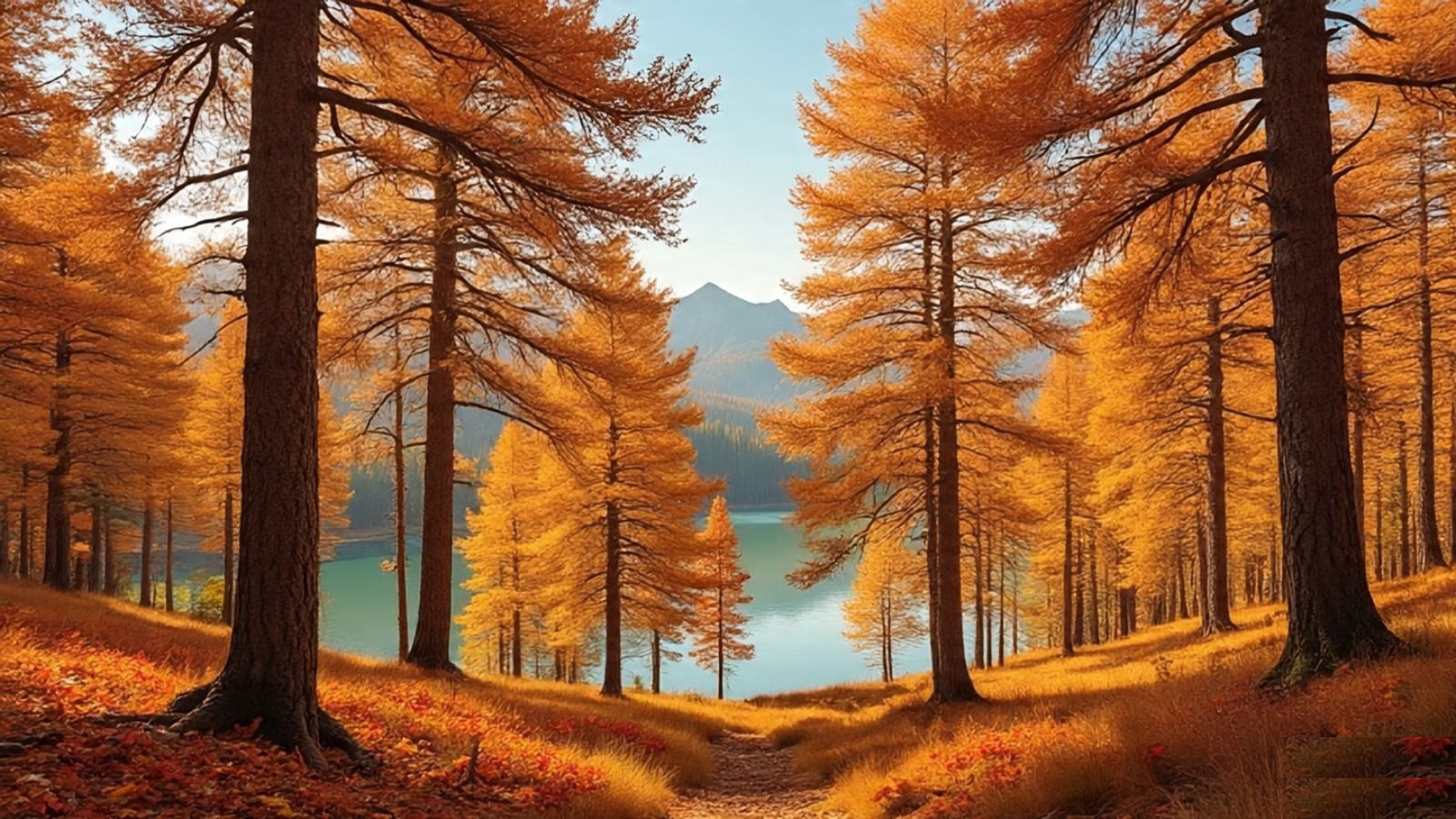
What Are Golden Larches? The Pacific Northwest’s Hidden Fall Treasure
Golden larches represent one of nature’s most remarkable phenomena in the Pacific Northwest. Unlike typical evergreen conifers, these deciduous trees transform into brilliant golden displays each fall before dropping their needles for winter.
The Pacific Northwest hosts two types of larches:
- Western Larches: Found at middle elevations (2,000-5,500 feet)
- Subalpine Larches: Growing at higher mountain elevations
Both species create stunning fall color displays that rival New England’s famous autumn foliage, yet remain relatively unknown to many Pacific Northwest residents.
Our Accidental Golden Larch Discovery
The Unexpected Sighting in Coeur d’Alene
We weren’t planning a fall foliage adventure. Our family trip to Coeur d’Alene, Idaho was simply to visit great-grandma with our 8-month-old daughter. But as we walked through the suburban neighborhood, my dad suddenly stopped on the sidewalk.
“It’s the golden larches,” he exclaimed, pointing toward the dark foothills where golden ribbons wove through the evergreen forest.
We stood transfixed, staring at the mountainside bedecked in these fabulous golden trees. Our little one slept peacefully in her carrier, oblivious to the natural spectacle that had stopped us in our tracks.
From Dream to Reality
Just the day before, we’d discussed golden larches as something we’d love to see “someday.” The distance from Portland seemed prohibitive with a baby, yet here we were, accidentally witnessing peak fall colors in northern Idaho.
Sometimes the experiences you’ve been hoping for just appear right in front of you.
Where to Find Golden Larches in the Pacific Northwest
Geographic Distribution
Golden larches grow exclusively on the east side of the Cascade Mountains, where conditions are sunnier and more open than the moss-laden forests of western Oregon and Washington. This means:
You WON’T find wild larches near:
- Portland, Oregon
- Seattle, Washington
- Other west-side Pacific Northwest cities
You WILL find larches in:
- Eastern Washington mountains
- Northern Idaho forests
- Eastern Oregon high country
- British Columbia interior
- Western Montana ranges
Why Location Matters
Larches require specific growing conditions that the western Cascades can’t provide. They need:
- Open, sunny environments
- Well-drained mountain soils
- Specific elevation ranges
- Cold winter temperatures
Best Places to See Golden Larches
Northern Idaho Locations
Q’Emiln Park, Post Falls, Idaho: Our accidental discovery led us to this excellent viewing spot. Popular with hikers and rock climbers, it offers close-up views of western larches against dramatic mountain backdrops.
Coeur d’Alene Area: The foothills surrounding this resort town provide numerous opportunities to spot golden larches from roads and neighborhoods.
Washington State Larch Viewing
Leavenworth Area: The Bavarian-themed town sits in prime larch territory North Cascades: Highway 20 offers spectacular larch viewing opportunities Okanogan National Forest: Multiple trails lead through larch groves
Oregon Larch Destinations
Eagle Cap Wilderness: Home to some of Oregon’s most spectacular larch displays Wallowa Mountains: Remote but rewarding larch viewing locations Blue Mountains: Accessible areas with beautiful fall larch colors
When to See Peak Golden Larch Colors
Timing Your Visit
Golden larch season is notoriously brief and varies by elevation and weather:
Peak Season: Mid-September to early October Duration: Typically 2-3 weeks at any given location Weather Dependency: Early snow or wind can end the display abruptly
Elevation Considerations
Higher Elevations (Subalpine Larches): Peak colors arrive first, often by mid-September Middle Elevations (Western Larches): Peak colors usually occur late September to early October
Planning Your Golden Larch Adventure
Travel Considerations with Families
Our experience proved that larch viewing can work with babies and young children:
- Choose easily accessible locations
- Plan for shorter stops
- Bring entertainment for car rides
- Consider staying overnight near larch areas
Photography Tips
Best Lighting: Golden hour creates magical larch photography Composition: Mix larches with evergreens for color contrast
Weather: Overcast skies can enhance golden colors Equipment: Wide-angle lenses capture expansive larch forests
Understanding Larch Ecology
Why Larches Are Special
Larches represent evolutionary adaptation to harsh mountain environments. Their deciduous nature allows them to:
- Survive extreme winter conditions
- Maximize photosynthesis during short growing seasons
- Thrive in areas too harsh for evergreen competitors
Conservation Importance
Golden larches play crucial ecological roles:
- Wildlife habitat during migration seasons
- Soil stabilization on mountain slopes
- Carbon sequestration in mountain ecosystems
- Indicator species for climate change research
Distinguishing Larches from Other Trees
Common Misidentifications
Dead Trees: Newcomers often mistake golden larches for dying evergreens Aspen Trees: While both turn golden, aspens have distinctive round leaves Birch Trees: Yellow fall colors but different bark and habitat
Identification Features
Western Larches:
- Clusters of needles on short spurs
- Distinctive pyramidal shape
- Reddish-brown bark
- Mountain forest habitat
Making the Most of Larch Season
Combining Activities
Golden larch viewing pairs well with:
- Hiking: Many trails wind through larch forests
- Photography workshops: Capture peak fall colors
- Camping: Experience larches at sunrise and sunset
- Wildlife viewing: Migration season overlaps with larch colors
Regional Tourism
Many mountain communities celebrate larch season:
- Festival events: Some areas host fall color festivals
- Guided tours: Local outfitters offer larch viewing excursions
- Lodging deals: Off-season rates in mountain communities
The Science Behind Golden Colors
What Creates the Golden Display
Larch needles contain chlorophyll (green) and carotenoids (yellow/orange). As temperatures drop and daylight shortens:
- Chlorophyll production stops
- Green color fades
- Yellow carotenoids become visible
- Needles eventually drop
This process creates the spectacular golden display that makes larches so special among conifers.
Beyond the Golden Display
Year-Round Larch Interest
While fall colors attract most attention, larches offer interest throughout seasons:
- Spring: Bright green new needle growth
- Summer: Distinctive texture in forest canopy
- Winter: Striking bare silhouettes against snow
- Late winter: Tiny cones add visual interest
Planning Your Own Larch Discovery
Whether you stumble upon golden larches accidentally like we did, or plan a dedicated fall color expedition, these remarkable trees offer unforgettable experiences. The key is being in the right place during the brief but spectacular peak color window.
Remember that larch season waits for no one – when conditions are right, drop everything and go. Some of nature’s most beautiful displays are also the most fleeting.

Theo Louse
I am Theo Louse. My skills are dedicated to the field of technology information and try to make daily lives more enjoyable. With more than 12 years of experience with BM, we are particularly famous for 100% self-developed ideas. Over these years, we have worked to make everyday life more convenient for the fast-paced world we live in.