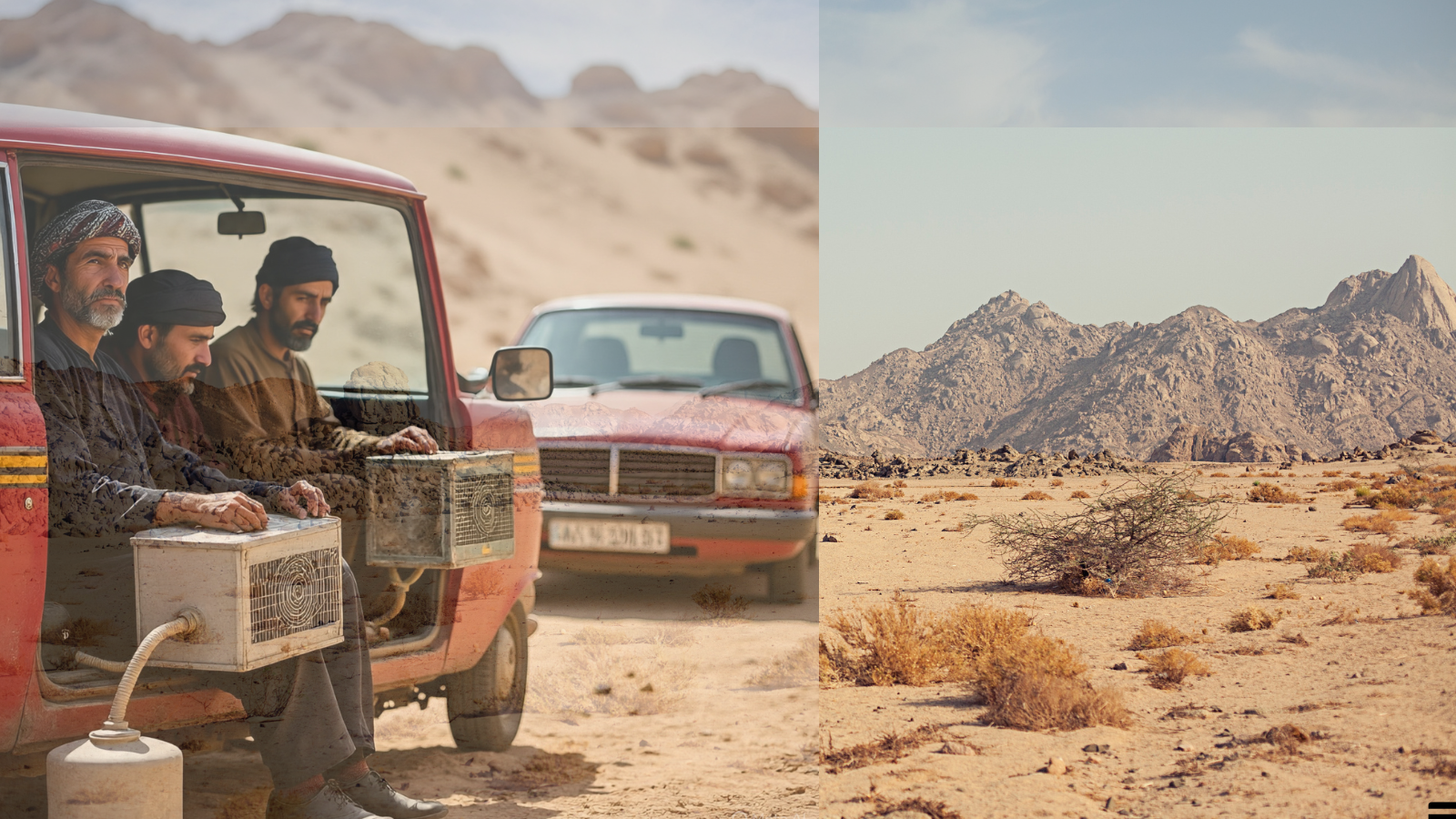
As summer temperatures soar across Afghanistan, local taxi drivers are finding innovative ways to beat the heat—using handmade air coolers built from everyday materials. In cities like Kabul and Kandahar, where temperatures have reached well over 40°C (104°F), these DIY cooling systems are more than just clever—they’re a lifeline.
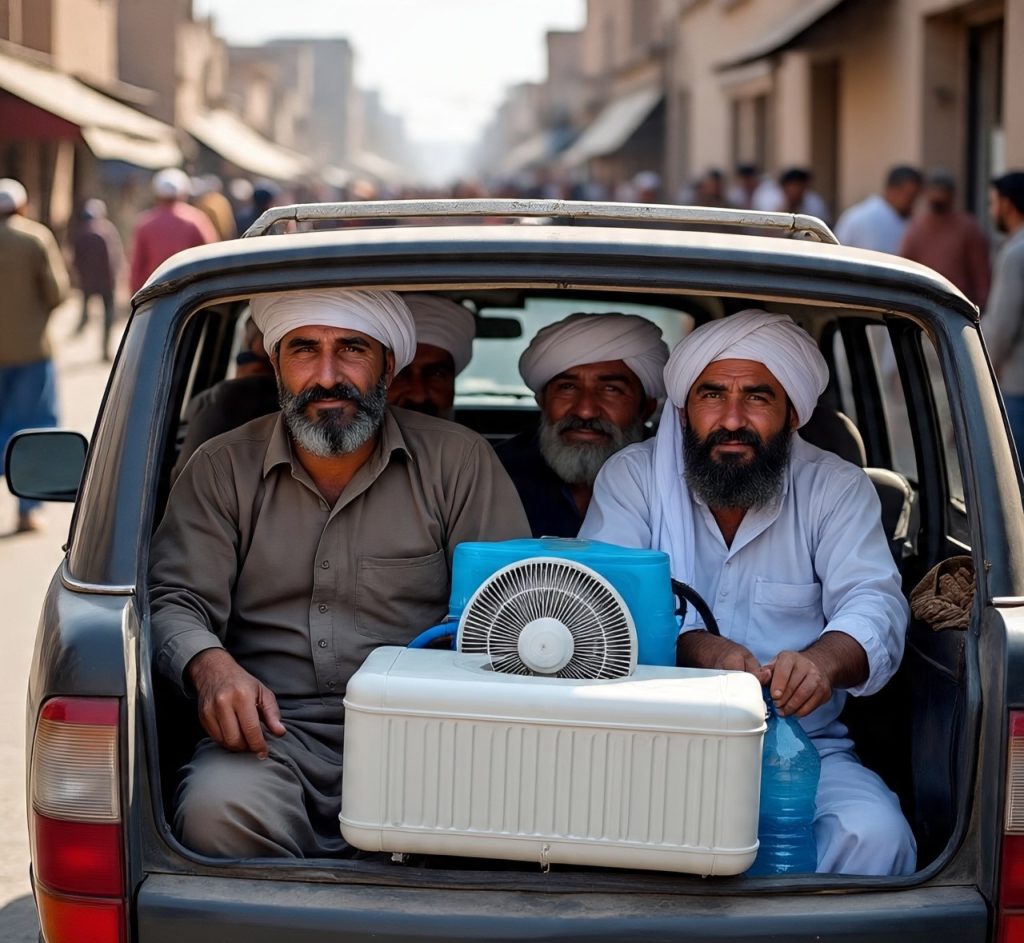
Fig 1: An Afghan taxi driver showcases his handmade car air cooler, offering relief during extreme summer heat.
Handmade Coolers: A Simple Yet Brilliant Idea
Using recycled plastic containers, fans powered by solar panels or car batteries, and wet cloth or ice compartments, Afghan taxi drivers have created air-cooling systems that significantly reduce cabin temperatures. These coolers operate similarly to swamp coolers, providing moisture-rich airflow in dry heat conditions.
“We can’t afford AC systems, and the roads are too dusty for open windows,” said one Kabul driver. “These coolers cost less than $10 to make and keep us going all day.”
How the Extreme Heat Is Changing Daily Life
Afghanistan has experienced increasingly severe heatwaves in recent years due to climate change. According to a report by Al Jazeera, the country faces rising temperatures, water shortages, and drought-like conditions, impacting agriculture, transportation, and health.
Taxi drivers are among the most exposed. Often spending 8 to 10 hours daily inside sun-heated metal vehicles, they report symptoms of heat exhaustion, fatigue, and dehydration. The handmade air coolers help prevent these effects by providing continuous airflow and humidity inside the vehicle cabins.
Social Media Buzz and Local Ingenuity
Photos and videos of these DIY inventions have gone viral on social media, where users praise the drivers for their resourcefulness. Some mechanics in Kabul are now offering “cooler installations” as a new service, using small water pumps, cooling pads, and battery-powered fans for improved efficiency.
How Other Regions Can Learn from This Innovation
This grassroots cooling method is gaining interest in other heat-prone countries. Similar techniques are being tested by tuk-tuk drivers in India and motorcyclists in Pakistan. The cost-effective, low-tech approach is especially valuable for regions with limited electricity or financial resources.
Connection to Broader Aviation and Transportation Stories
Just as Afghan taxi drivers innovate on the ground, global aviation is also adapting to changing weather patterns. For instance, United Airlines Flight UA770 recently made headlines for its onboard heat adaptation system after a tarmac delay in Las Vegas. Transportation professionals at all levels are finding new ways to respond to climate challenges.
Conclusion
In the face of adversity, Afghan taxi drivers are proving that innovation doesn’t require expensive technology. By building their own air coolers, they are not only surviving the heat but setting an example in resilience and creativity. As climate challenges mount, such grassroots solutions may become increasingly relevant across the developing world.
Sources
- Al Jazeera – Afghanistan’s Climate Struggle
- Bourse Magazine – United Airlines Flight UA770 Highlights