


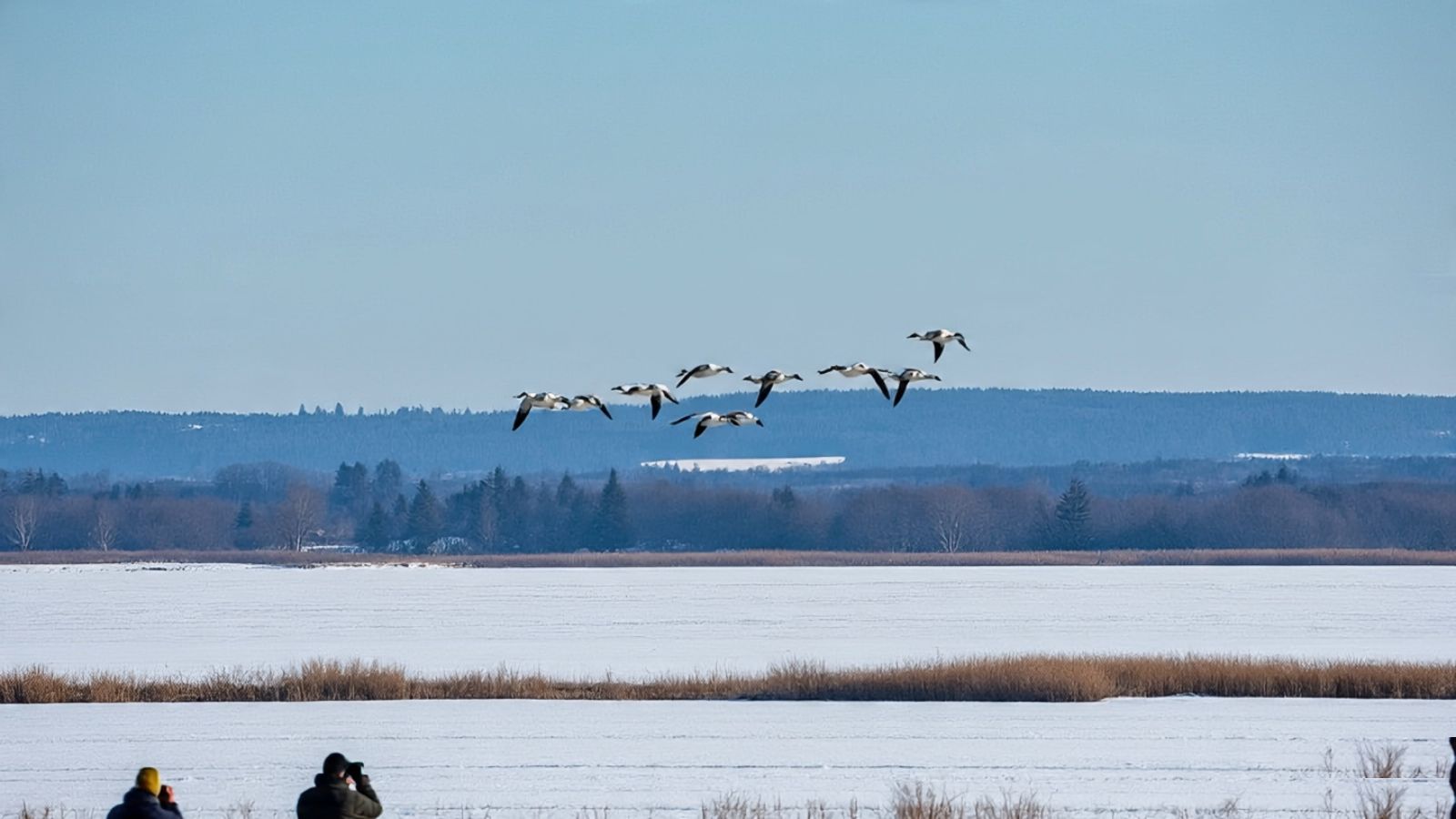
The Skagit Valley snow geese migration represents one of the Pacific Northwest’s most breathtaking natural phenomena. Each winter, thousands of snow geese transform agricultural fields into a living carpet of white, creating an unforgettable wildlife spectacle that draws visitors from across Washington State and beyond.
When to See Skagit Valley Snow Geese: Timing Your Visit Perfectly
Peak Season: November through March Best Viewing: December through February Optimal Time: Early morning (7-10 AM) and late afternoon (3-5 PM)
The Skagit Valley snow geese arrive in November and remain through March, with timing varying slightly each year based on weather conditions. These magnificent birds complete an incredible 3,000-mile journey from their summer breeding grounds on Wrangel Island in the Arctic to their winter home in the Skagit Valley.
December through February typically offers the most reliable snow geese sightings, as the flocks are well-established and weather patterns are stable. Early morning and late afternoon provide the best viewing opportunities when the birds are most active feeding in the agricultural fields.
Where to Find Snow Geese in Skagit Valley
Primary Locations:
- Mount Vernon area (Best Road and Chilberg Road intersection)
- Fir Island
- Conway area
- La Conner vicinity
- Agricultural fields along Highway 20
The Skagit Valley snow geese don’t remain in one location throughout their stay. These intelligent birds rotate between different agricultural fields based on food availability and disturbance levels. Mount Vernon consistently provides excellent viewing opportunities, particularly near the Best Road and Chilberg Road intersection.
Using eBird App to Track Snow Geese Locations
The most effective method for locating Skagit Valley snow geese involves using the free eBird app from Cornell Lab of Ornithology. This crowd-sourced platform allows bird watchers to report real-time sightings, making it invaluable for finding current snow goose locations.
eBird Success Strategy:
- Download the free eBird app
- Search “snow goose” near Mount Vernon, WA
- Check recent sightings (within 3-7 days)
- Navigate to map markers showing high bird counts
- Arrive early for best viewing opportunities
Recent eBird reports have documented flocks exceeding 10,000 snow geese in single locations, demonstrating the incredible scale of this migration.
Identifying Skagit Valley Snow Geese
Snow geese are easily distinguished from other waterfowl by their distinctive features:
- Pure white plumage covering most of the body
- Black wing tips visible during flight
- Orange-pink bills and legs
- Smaller size compared to swans
- Loud, discordant calls when in flight
These identifying characteristics help separate snow geese from the trumpeter swans and tundra swans that also winter in the Skagit Valley.
Combining Snow Geese with Daffodil Field Viewing
March visitors enjoy a unique opportunity to experience both the Skagit Valley snow geese migration and the famous daffodil fields coming into bloom. This timing creates a spectacular combination of wildlife and floral displays that epitomizes the Pacific Northwest’s natural beauty.
Roozengaarde Farm offers free daffodil viewing (outside tulip season) and maintains a helpful bloom map showing current flower field conditions. The daffodils typically peak in late March, perfectly coinciding with the final weeks of snow goose presence.
Photography Tips for Snow Geese
Camera Settings:
- Fast shutter speed (1/500s or faster) for flight shots
- Continuous autofocus mode
- Higher ISO for early morning/late afternoon lighting
- Telephoto lens recommended (200mm minimum)
Composition Ideas:
- Capture takeoff sequences showing wing span
- Wide shots showing flock magnitude
- Silhouettes against mountain backdrops
- Action shots of feeding behavior
Viewing Etiquette and Conservation
Respecting the Skagit Valley snow geese and their habitat ensures this natural spectacle continues for future generations:
- Maintain appropriate distances (minimum 100 feet)
- Stay on public roads and designated viewing areas
- Avoid loud noises or sudden movements
- Never feed the birds
- Pack out all trash
- Respect private property boundaries
Planning Your Snow Geese Adventure
Essential Items:
- Binoculars or spotting scope
- Warm, layered clothing
- Waterproof boots
- Camera with telephoto lens
- eBird app downloaded
- Local area map
Nearby Amenities:
- Mount Vernon: restaurants, lodging, gas stations
- La Conner: charming downtown, galleries, dining
- Conway: rural charm, fewer crowds
- Skagit Valley: numerous farm stands, local products
Weather Considerations
Pacific Northwest winter weather can be unpredictable. Check forecasts before departing and prepare for:
- Rain or drizzle
- Temperatures 35-50°F
- Muddy field conditions
- Limited daylight hours
- Potential fog reducing visibility
Making the Most of Your Visit
The Skagit Valley snow geese migration offers more than just bird watching. Consider extending your visit to explore:
- Skagit Valley tulip fields (April)
- Local wineries and breweries
- Deception Pass State Park
- Historic downtown La Conner
- North Cascades scenic drives
Conclusion
Witnessing the Skagit Valley snow geese migration provides an unforgettable connection with one of nature’s most impressive wildlife spectacles. With proper timing, location knowledge, and the right tools like eBird, visitors can experience thousands of snow geese transforming ordinary agricultural fields into extraordinary wildlife theaters.
Plan your visit between December and February for the most reliable viewing, arrive early for optimal lighting and bird activity, and remember to respect both the wildlife and the agricultural communities that make this natural wonder possible.

Theo Louse
I am Theo Louse. My skills are dedicated to the field of technology information and try to make daily lives more enjoyable. With more than 12 years of experience with BM, we are particularly famous for 100% self-developed ideas. Over these years, we have worked to make everyday life more convenient for the fast-paced world we live in.